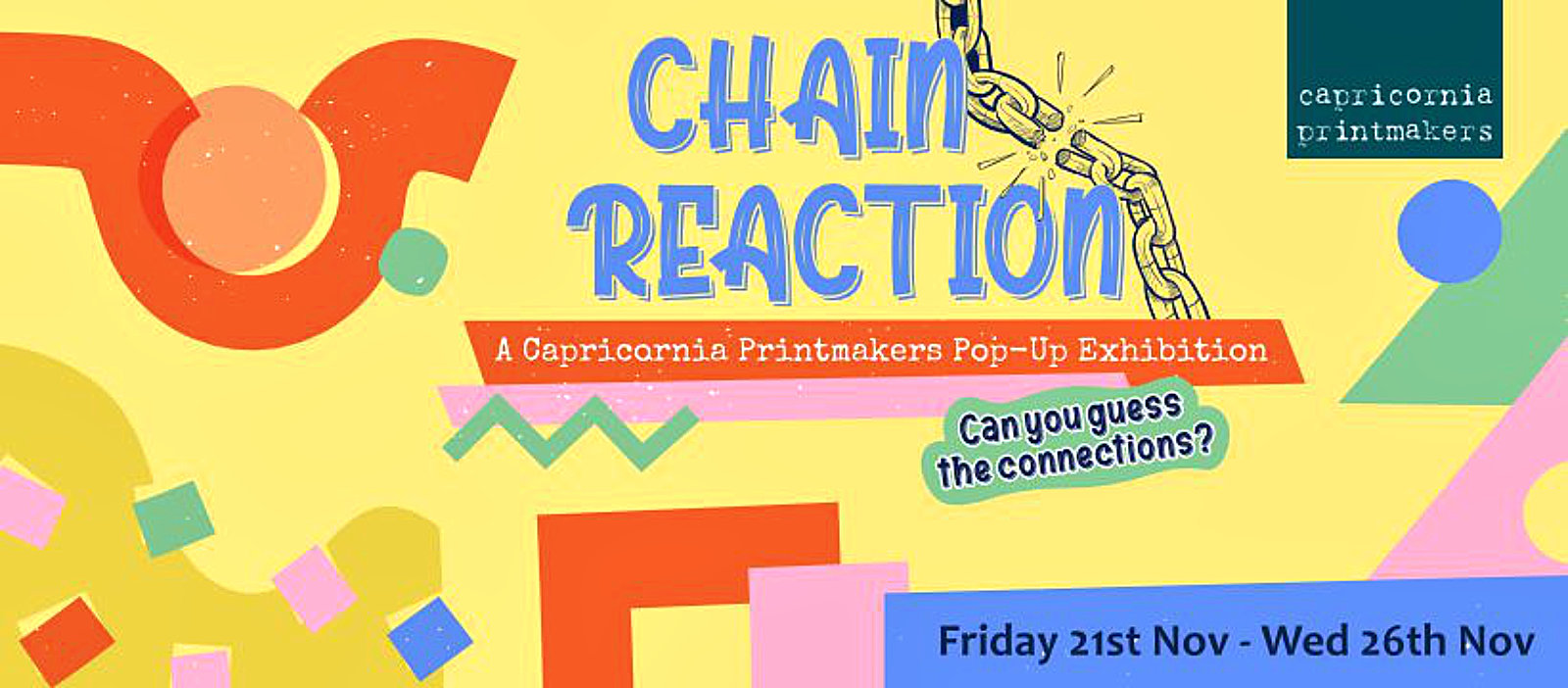
Discover the unexpected twists and turns as ideas were passed from one artist to the next with each step revealing a new layer of possibility.
This Pop-Up Exhibition displayed 3 'Chains' of prints, in which each artist created a print in response to the artwork of the person before them in their chain. Nobody knew what the final artworks would be until the whole chains were revealed at the exhibition opening on Friday 21 November.
Most of the works were photographed at the exhibition under less than ideal lighting. Unfortunately some of the resulting reflections and other artefacts could not be eliminated for the catalogue images. Right click on an image to view full screen.
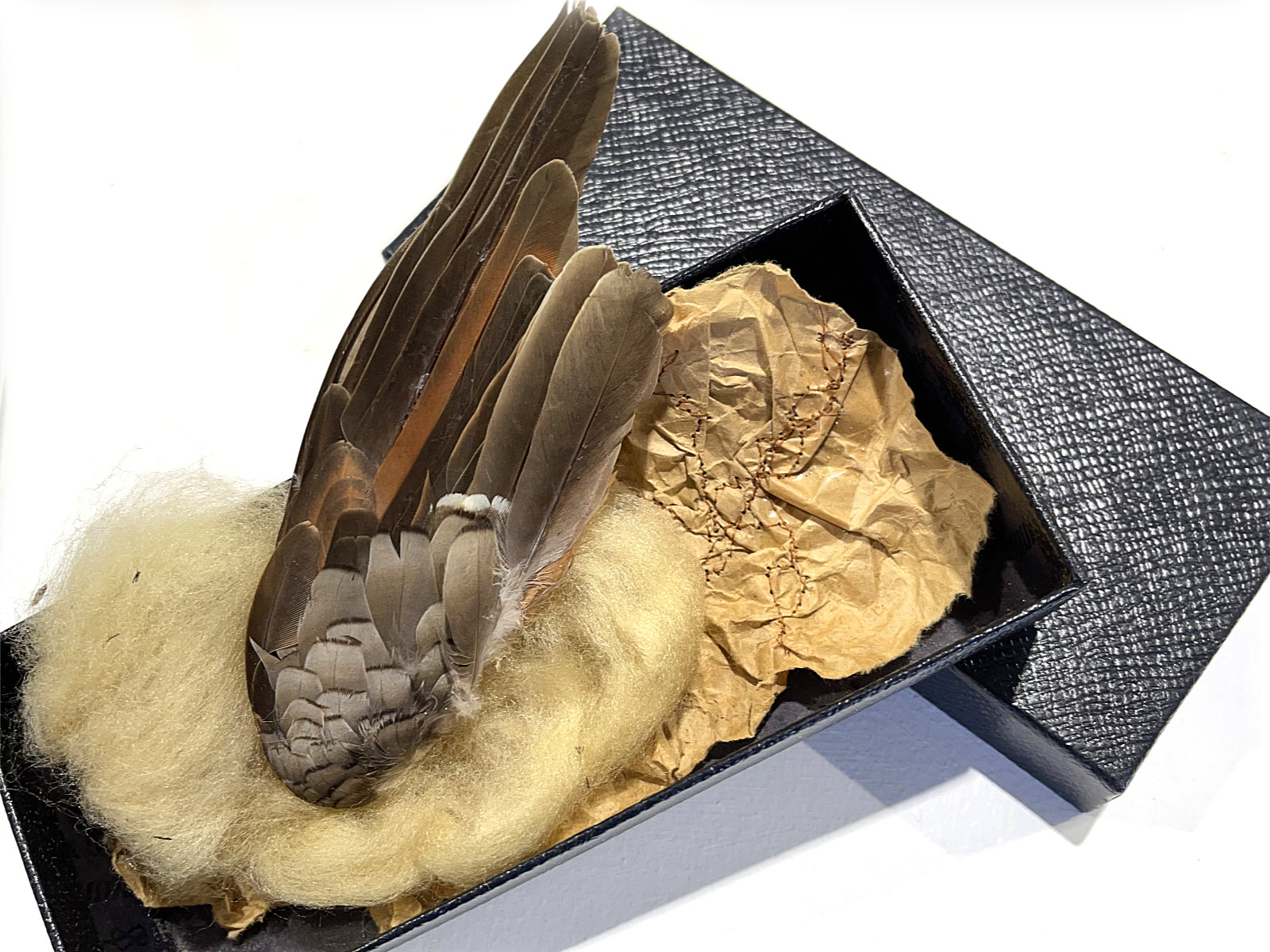
I have had the bird's wing for several years as I love to gather such random things. It would have been in my garden or possibly picked up on a beach walk. I love that it feels like the bird has left you a gift to be found.
This wing has travelled for two years as one of the "Wunderkammer" collection in my Hybrid Greening exhibition with Veronika Zeil. It was perched on a branch which was a twisted seed pod beside another wing like two lovebirds on a branch.
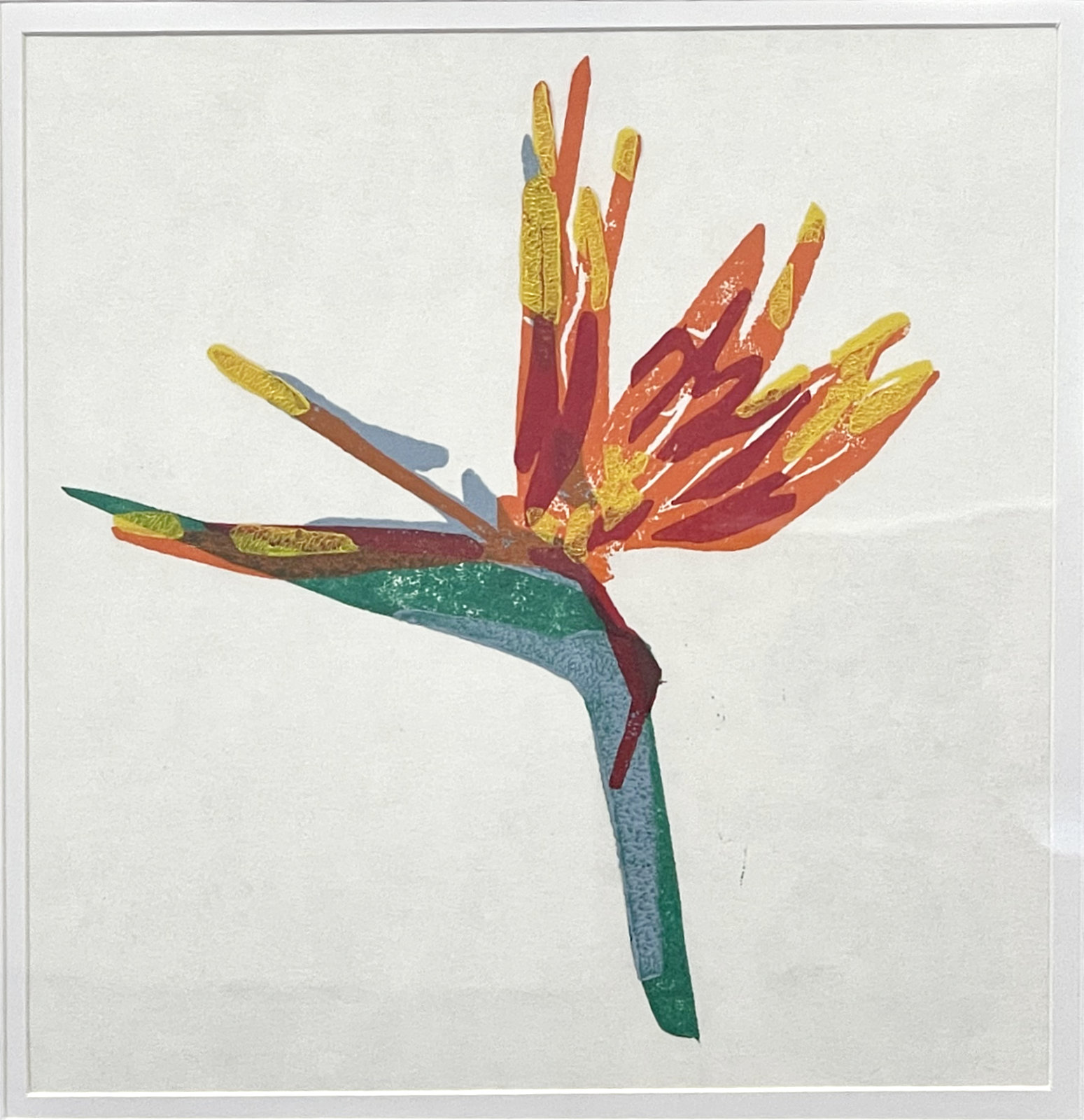
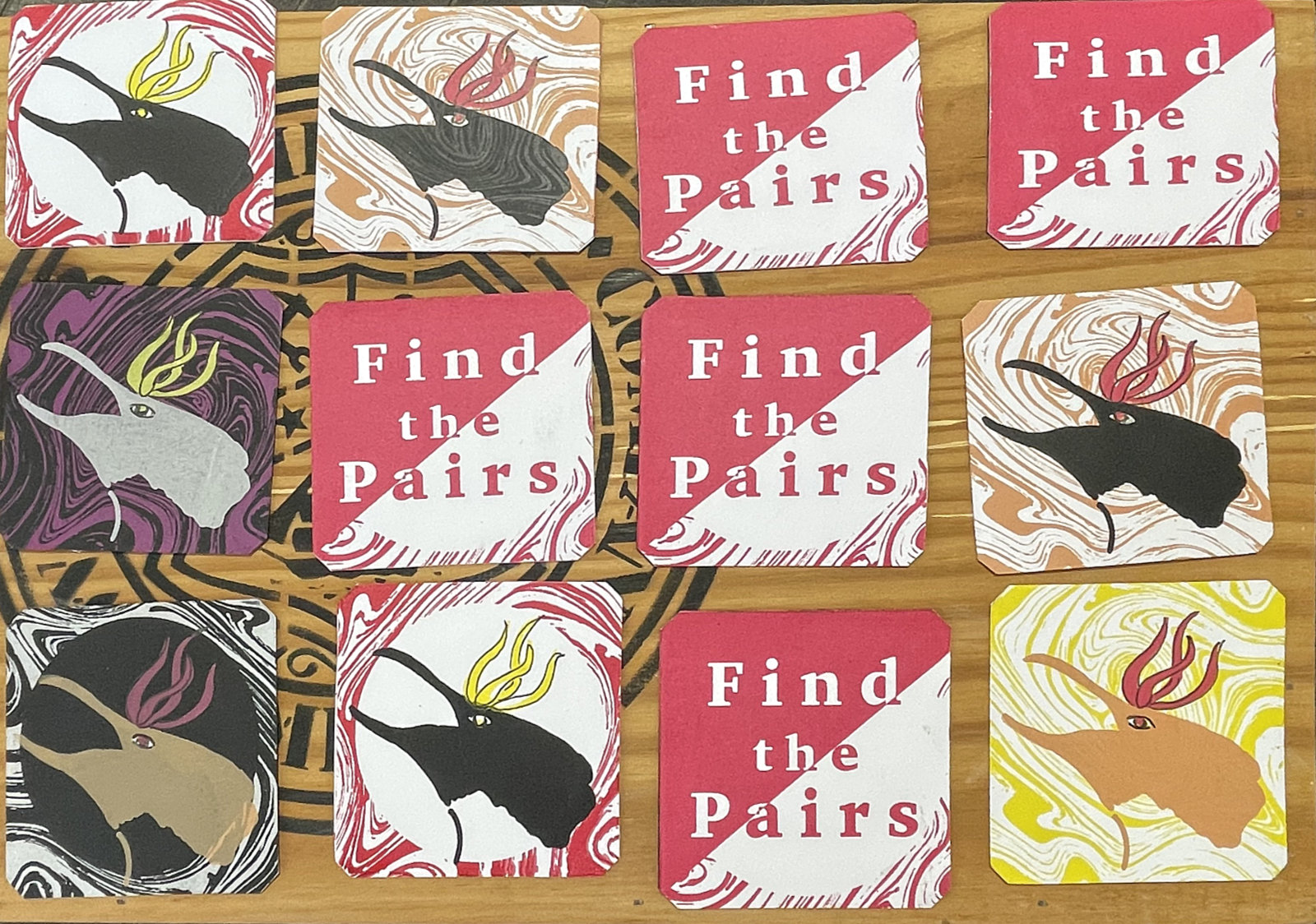
Nanette's bird's wing inspired me with so many possibilities it was hard to decide which direction to take.
Wanting to play with colour, I opted for the bird of paradise plant with it's bright, plumed blooms perched upon a long stem.
In the previous work I was captivated by the overall shape of the flower which seemed more bestial than floral.
Adding a slightly fantastical plume to a squawking penguin gave me the silhouette I was looking for.
Screen printing allowed me to create a collection of cardboard tiles with different colours and backgrounds which could be used for a simple memory matching game.
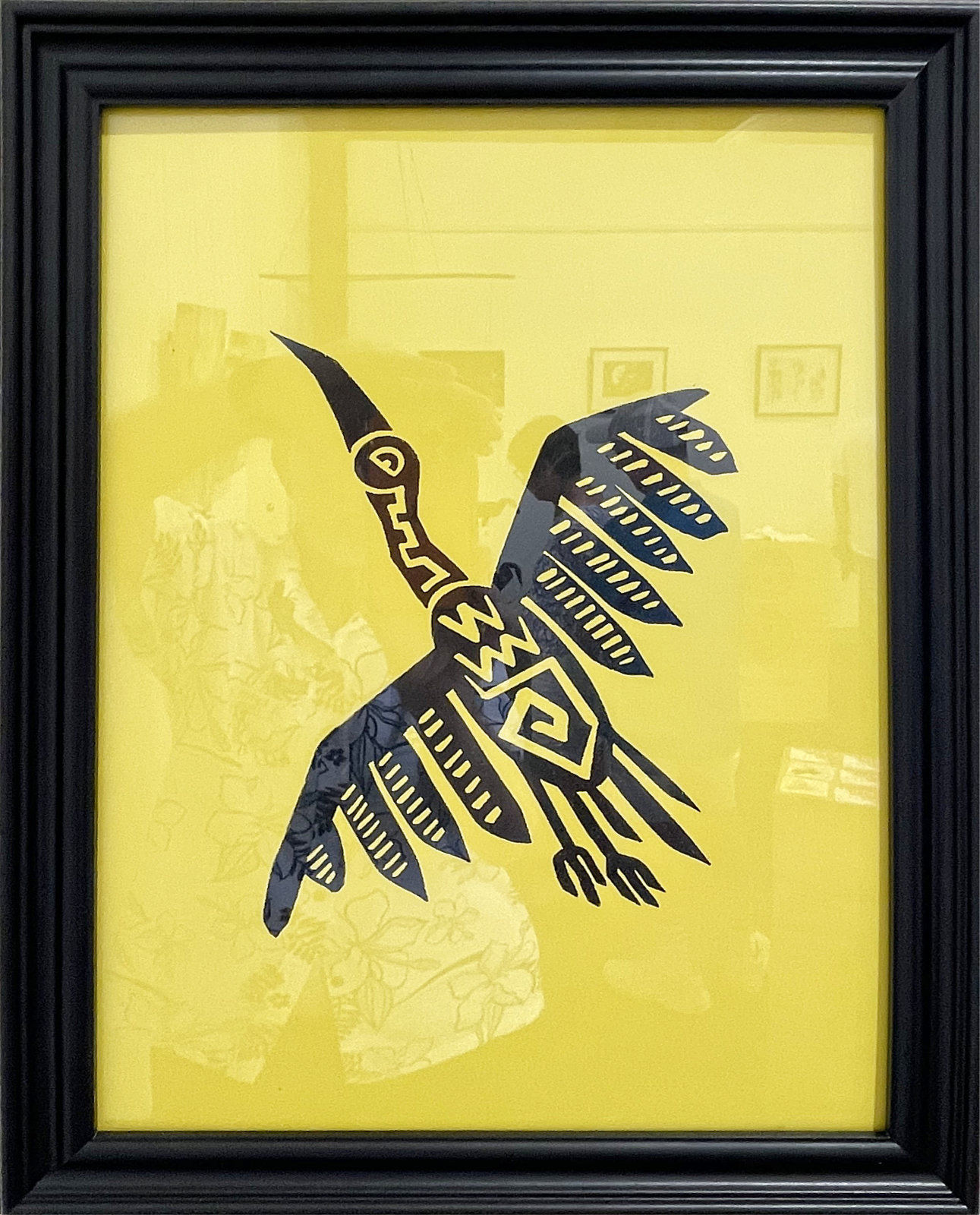
As part of an artists' game of 'chain reaction', this screenprint is a reinterpretation of the previous work.
Now represented as an ancient feathered fowl, it soars into a saffron sky. The abstract cosmic motifs were inspired by various historic cultures from South American, Egyptian to Southeast Asian.
This work embraces early art styles through digital technologies on smooth-uniform present-day paper.
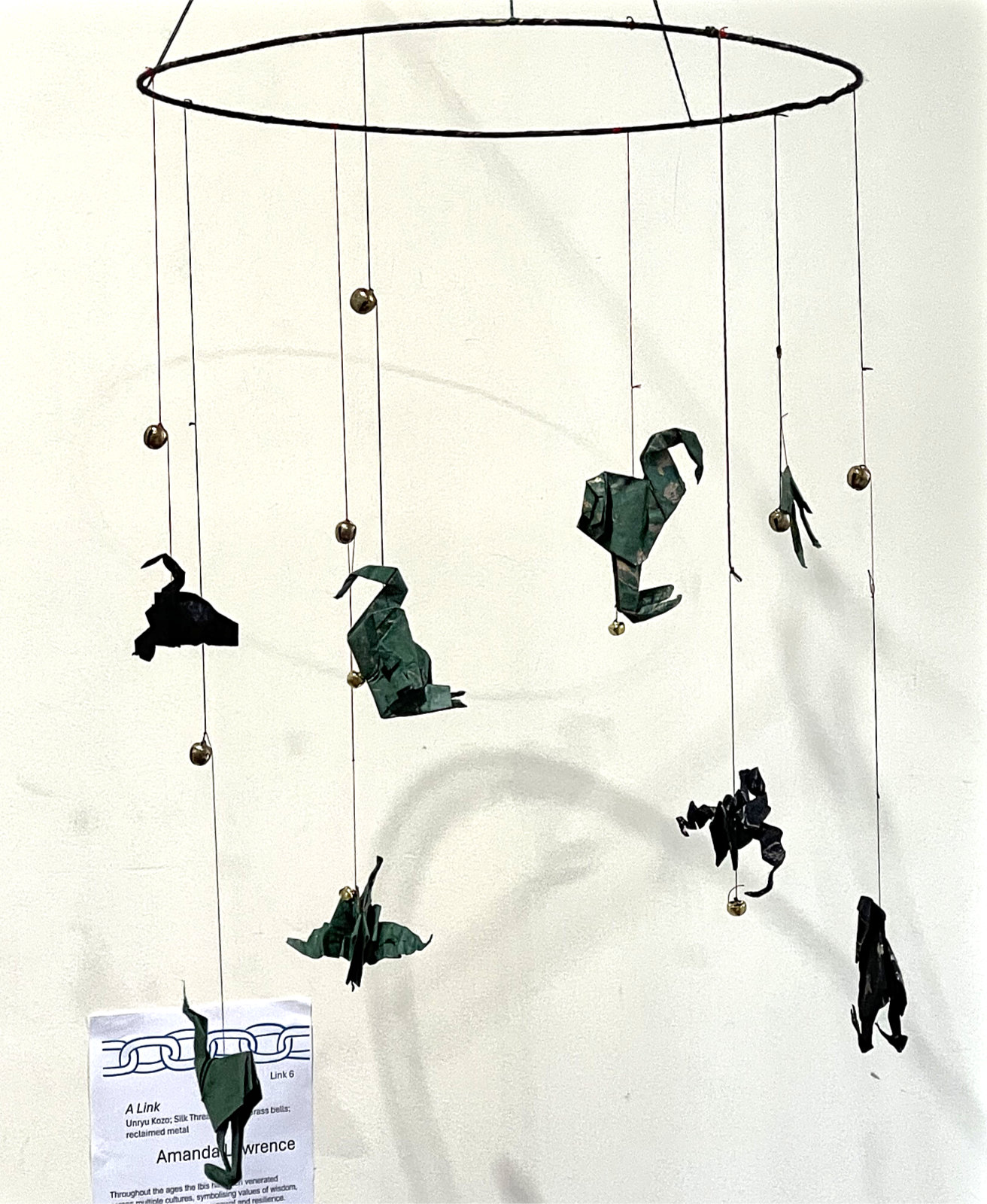
Throughout the ages the Ibis has been venerated across multiple cultures, symbolising values of wisdom, knowledge, communication, renewal and resilience.
In their various mythologies, the Ibis is often a connection between the celestial and earthly realms, which I have tried to evoke by combining discarded metal with luxury papers and fibres.
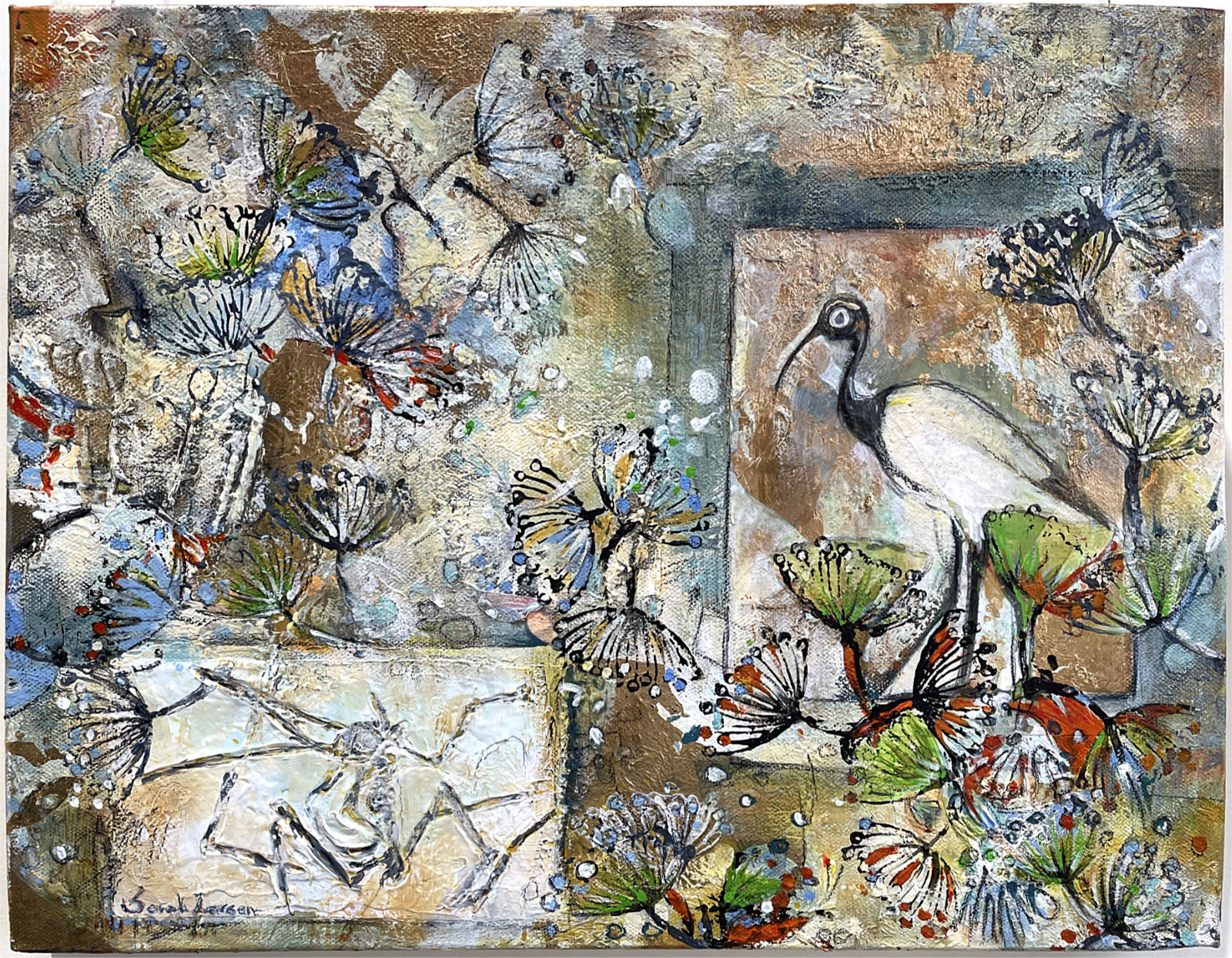
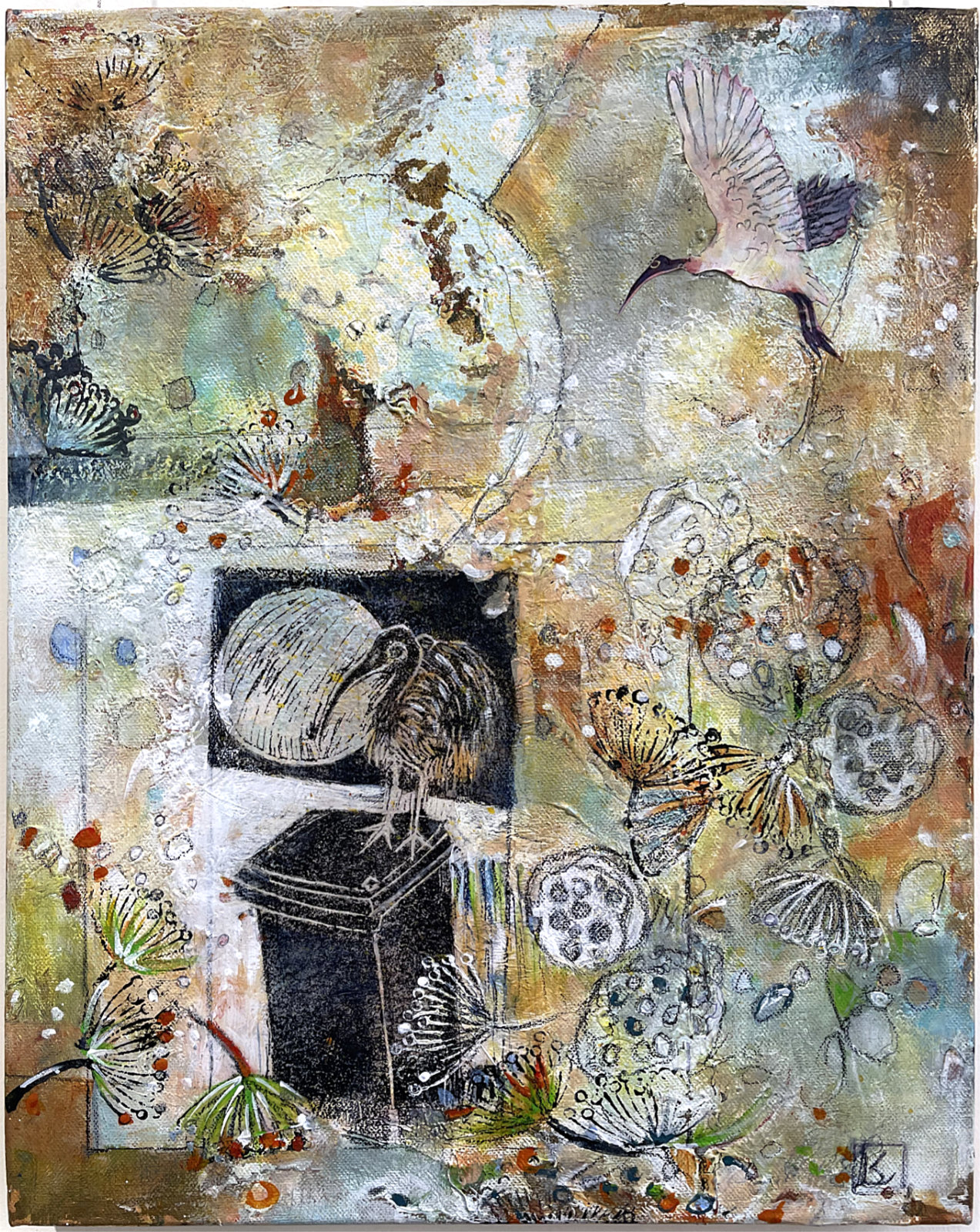
Fossil Fame Forgotten explores the strange and poetic arc of evolution and cultural memory through the unlikely journey of the ibis. Once soaring as the majestic and now fossilised pterodactyl, the ibis rose to divine stature as the sacred symbol of Thoth, the god of wisdom, in ancient Egypt. Embellished with gold leaf, it reflects the bird's mythic past - an era when it was revered and adorned in regal imagery.
Juxtaposed across the diptych is the ibis in its contemporary context: scavenging in suburban Australia, colloquially and dismissively dubbed the "bin chook." Through layered textures, fossil imagery, and symbolic gilding, the viewer is invited to reflect on how creatures - and by extension, ideas and cultures - are exalted, exploited, and ultimately forgotten.
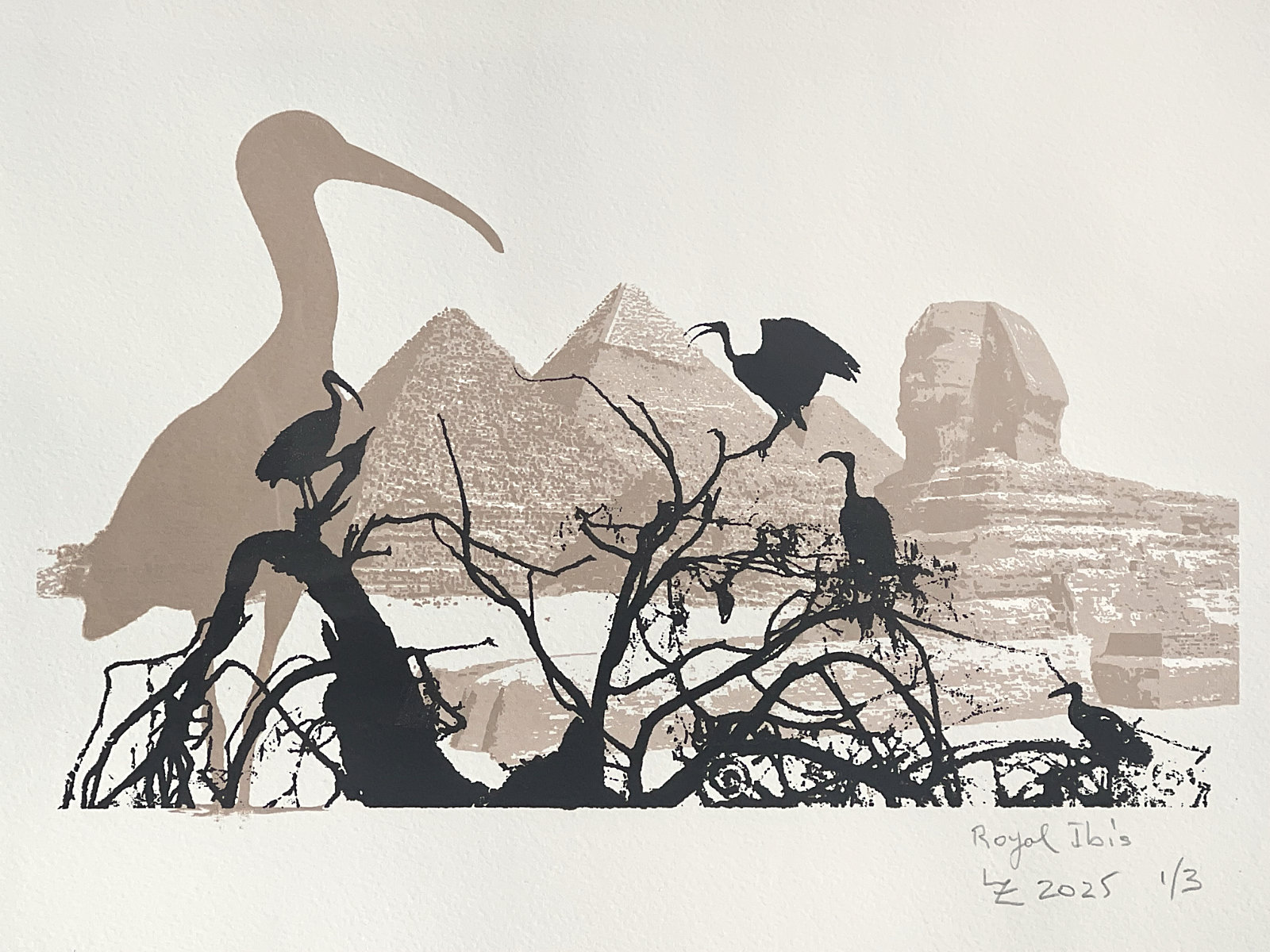
For me, "Royal Ibis" stood out as the core of Sarah Larson's diptych and accompanying artist's statement.
That meant Egypt, and my mental image of Egypt centres on the pyramids. An internet search yielded modifiable images for a collage that showcases the poster-oriented strengths of traditional silk screen printing.
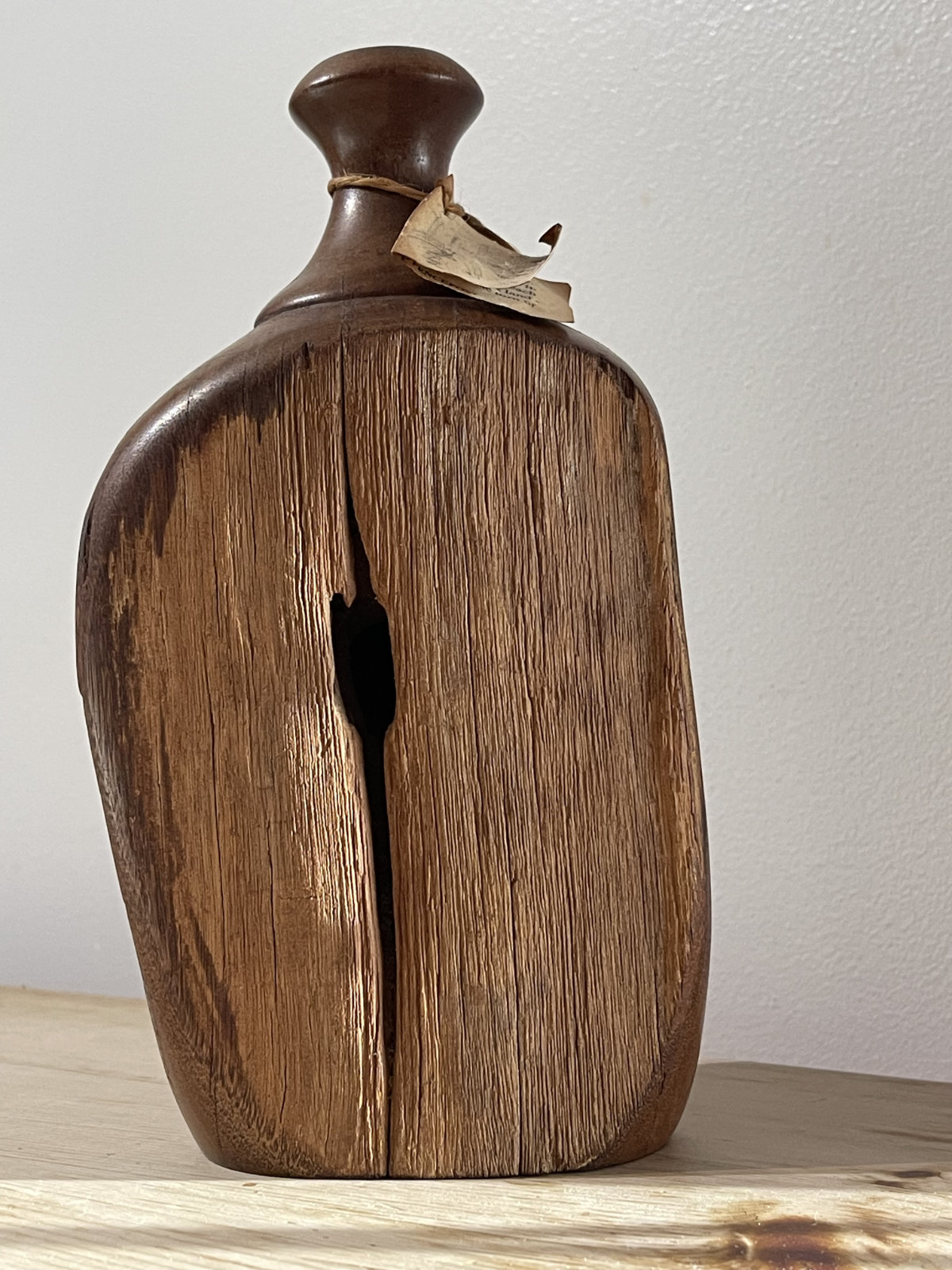
This object is a segment of a typical Central Queensland usage Australian Turpentine fence post that's been converted into an interesting sculpture cum vase by a local wood turner.
It was purchased as a momento of traditional practice from the now unknown artist, likely at the local farmer's market.
I was able to develop and link my print to the original object by reflecting on its evolving history, the material and the form.
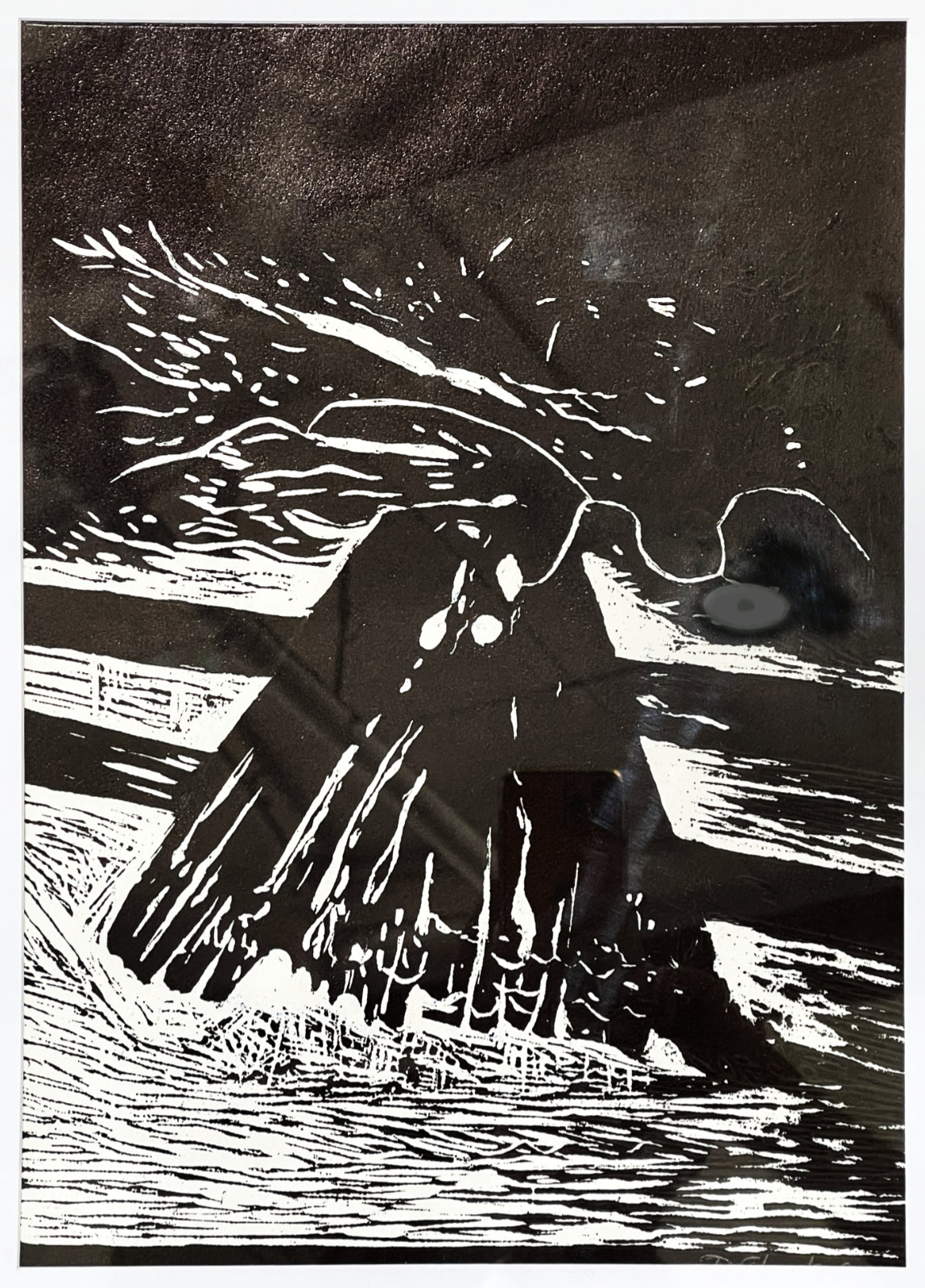
Alice laughed. 'There's no use trying,' she said 'one can't believe impossible things.'
'I daresay you haven't had much practice,' said the Queen. 'When I was your age, I always did it for half-an-hour a day. Why, sometimes I've believed as many as six impossible things before breakfast...'
--Lewis Carroll, "Through the Looking Glass"
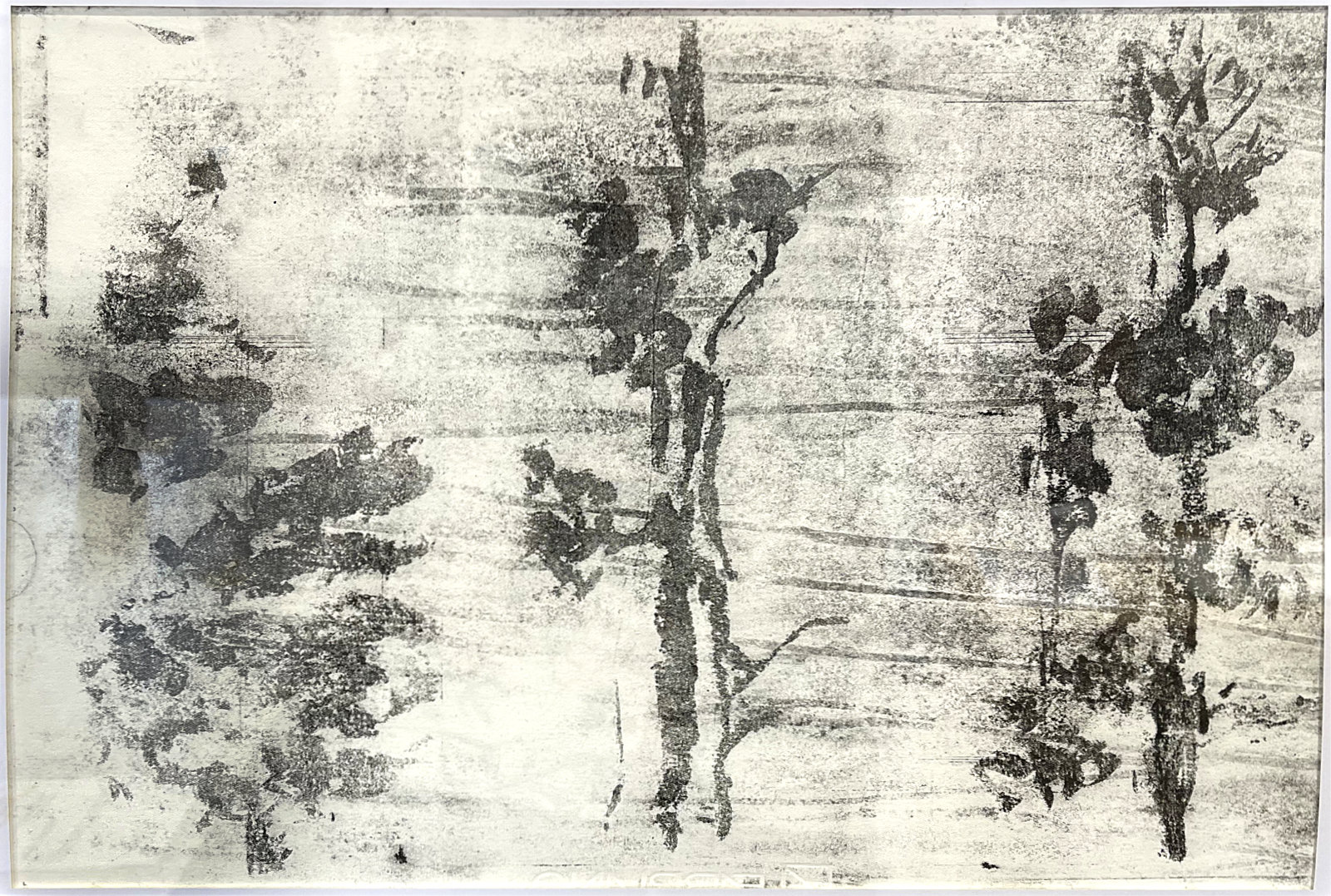
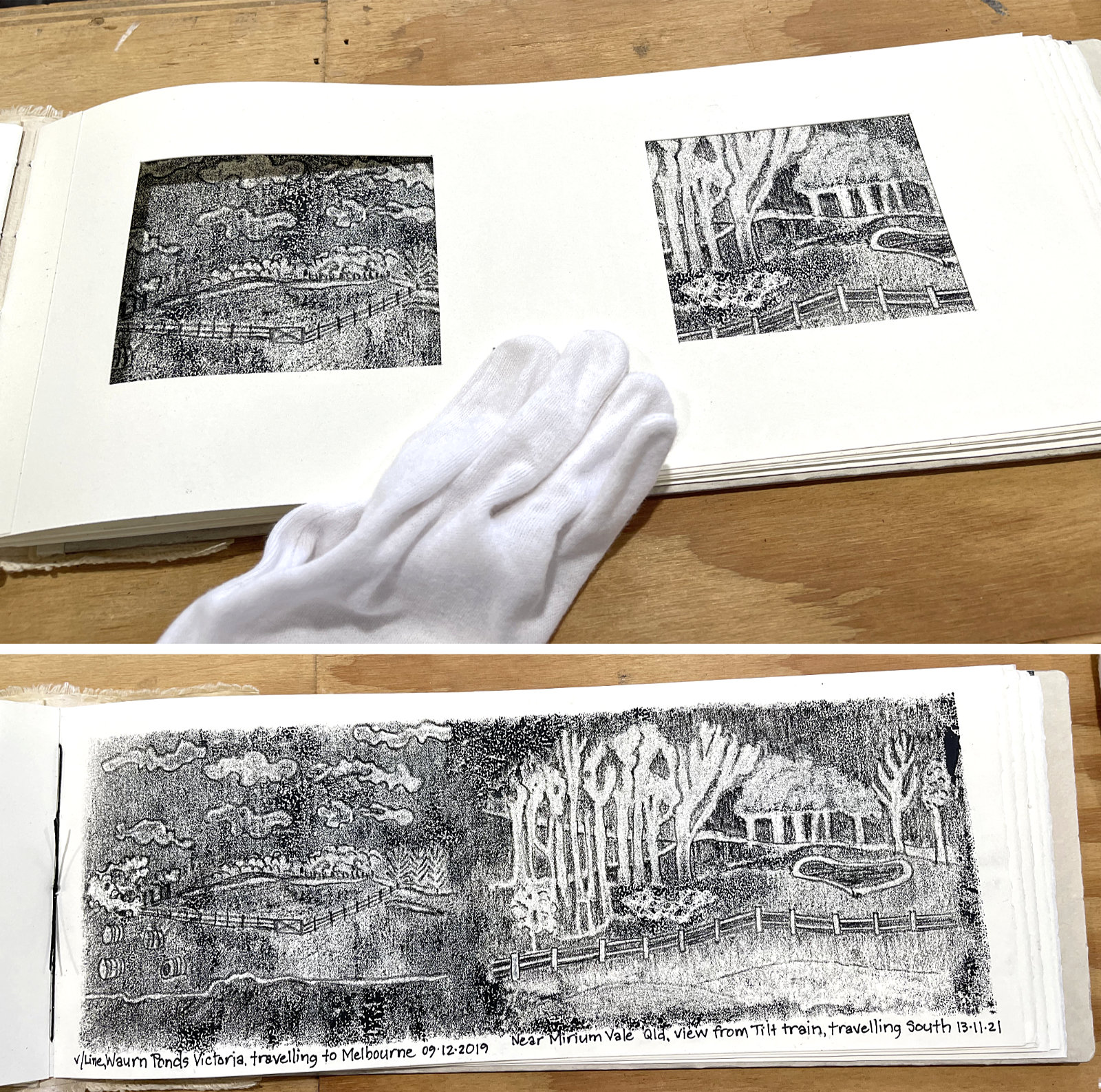
From Here to There is an artists' book disguised as a sketchbook. Heather's print was an evocative, dreamy and tranquil image of trees viewed as if moving at speed.
Heather's working title 'View from the Train' created immediate memories of my own journeys as a passenger in a train or a car, capturing the ever-changing views in my sketchbook whilst looking through the window.
I have recreated my own sketchbook images as trace monotype prints, including negative ghost prints, hand colouring. Cut outs in the page preceding each pair of monotypes, give the sense of the scene being viewed through a window.
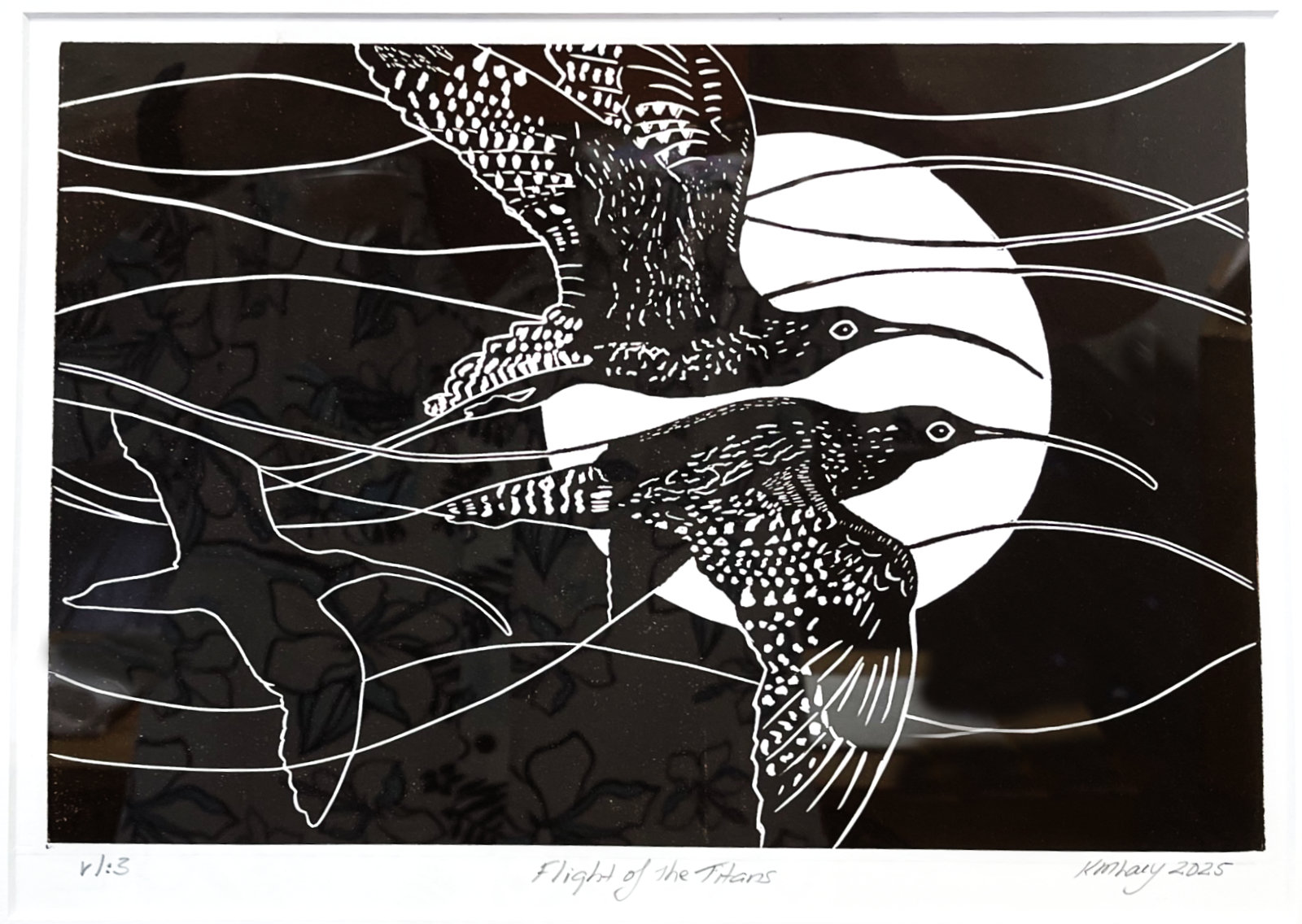
When I first saw the previous artist's work, I knew immediately what I was going to do. Funnily enough it involved birds!
The Eastern Curlew is a migratory bird which traverses the hemispheres twice yearly leaving Australia in late March/early April to fly to northern China and Russia to breed. Often this is a non-stop journey spanning three days. They return in summer, along with their six- to eight-week-old chicks who instinctively know the way, to replenish their weight by feeding along the eastern seaboard tidal flats. It is estimated that the total population of Eastern Curlews has declined by close to 80% in the last 30 years with their biggest threats being human disturbance and habitat degradation.
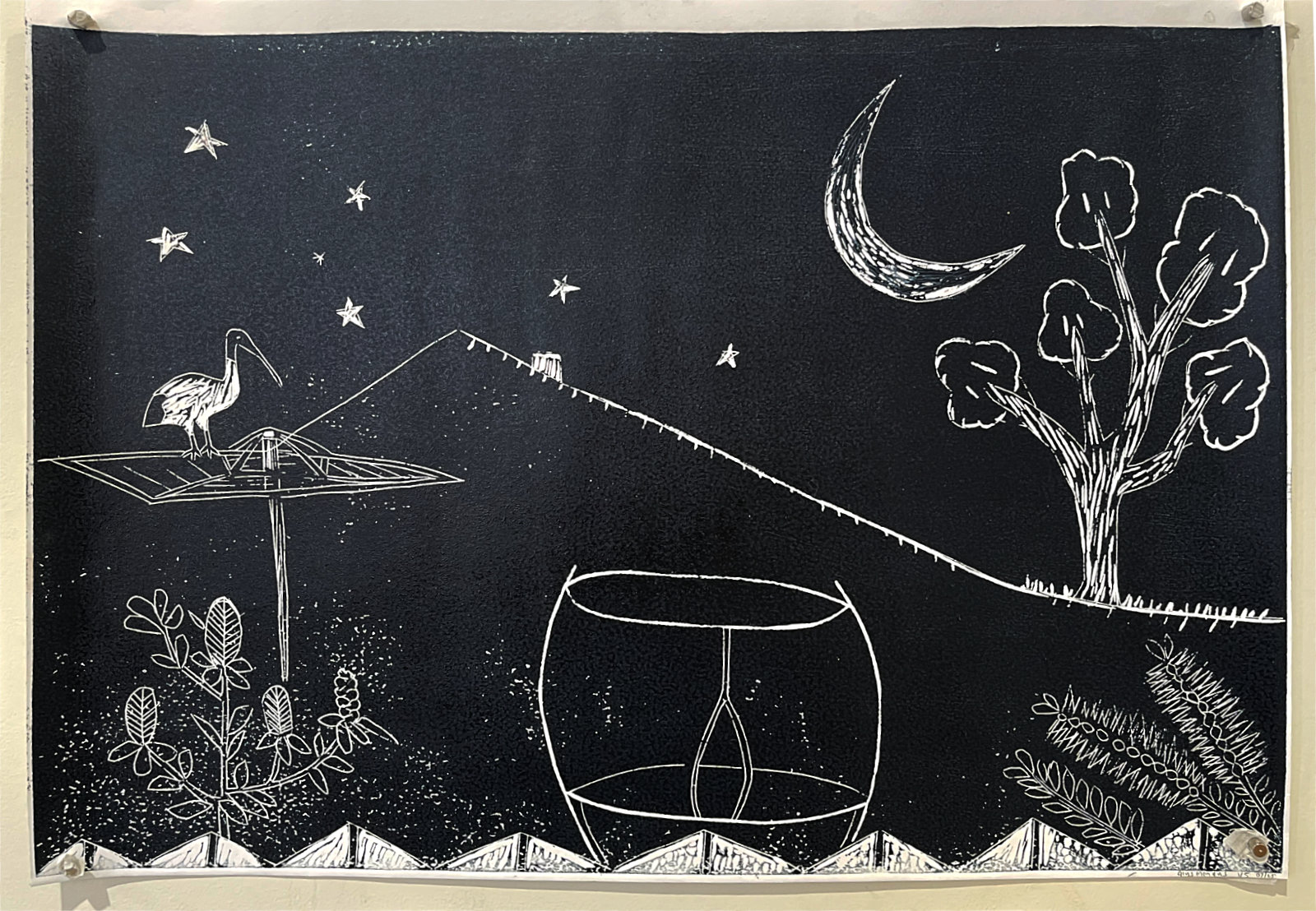
Alys Mendus now lives on Wadawurrung Country in Victoria and makes art from her little home studio inspired by the natural world around here. This second piece in the Chain Reaction is a lino print of her back garden creating a sense of place, now, in her life and sharing her story - as a parent there is a trampoline, as someone in Australia the Southern Cross hangs in the sky and the plants are banksia and bottlebrush.
An ibis sits waiting on the fence. This piece has a moon responding to the last piece in the chain of birds flying across a moon. Using old floor lino for this larger piece meant I was able to add texture and have created a series of prints adding watercolour to the print surface after it was completed.
[No text provided.]
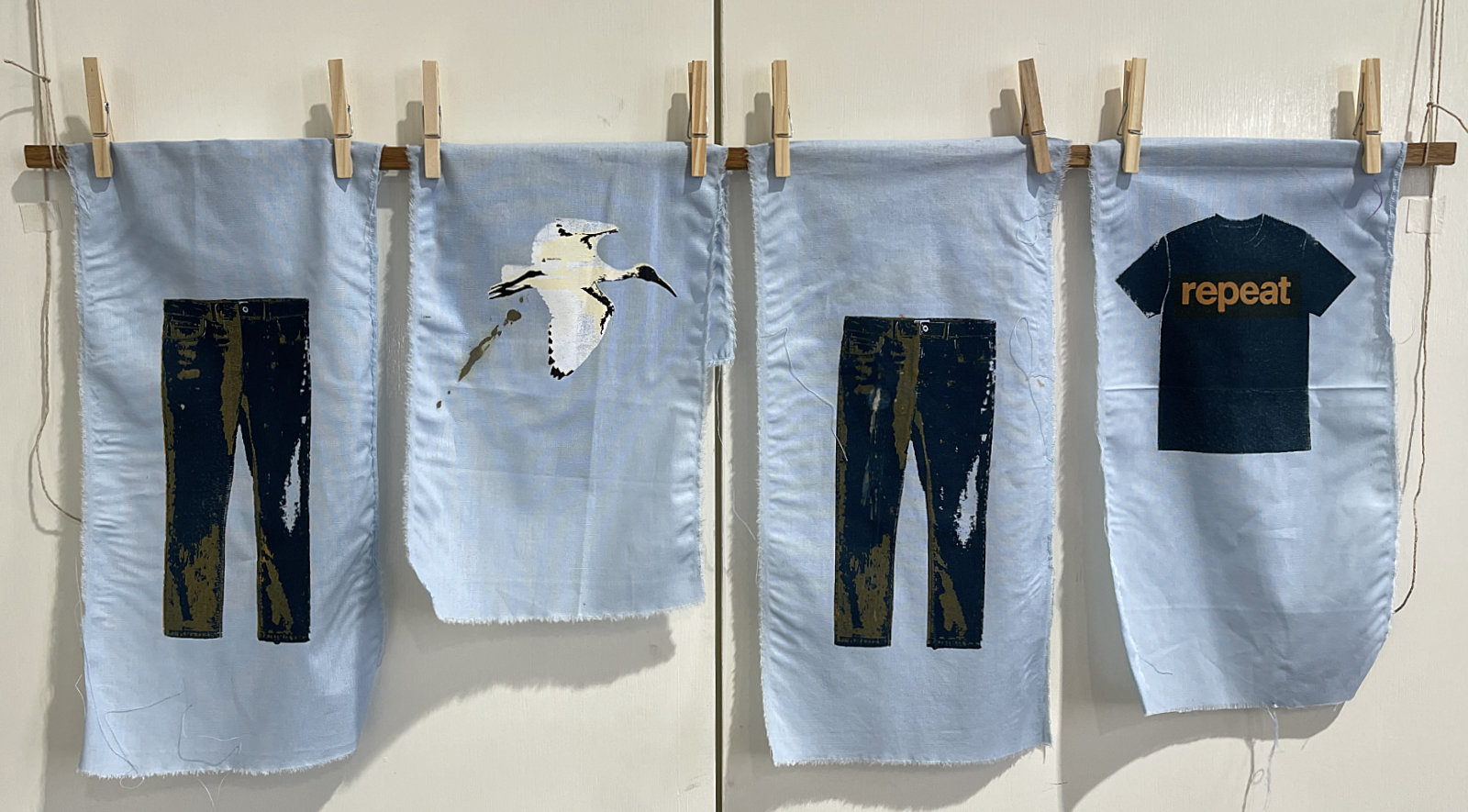
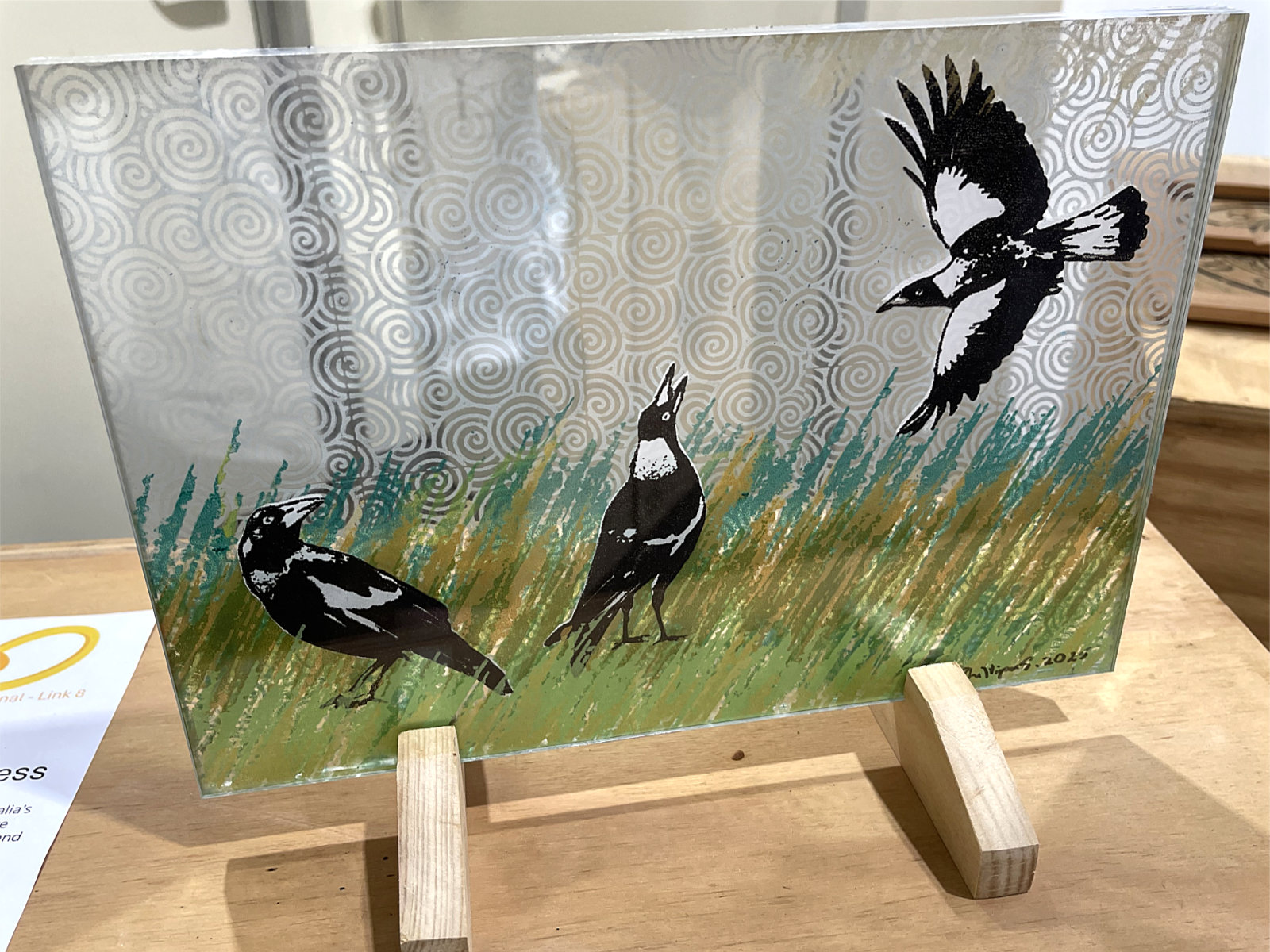
Thinking of birds and clotheslines lead me to Australia's other favourite bird, the magpie. These magpies have moved away from the clothesline and are playing in and above the long grass.
"Tiding" is a collective noun for magpies because their song is often likened to carolling, bringing glad tidings.
The 8000 strong Terracotta Army of life size clay figures was lost and forgotten for over 2,000 years before being accidentally uncovered in China in 1974. As the warriors were excavated and put on display they became famous around the world as objects of both cultural and artistic significance.
The figures shown here are the remnants of at least two sets of replicas created at the time and sold as inexpensive souvenirs at events such as the 1988 Brisbane Expo. Like the larger originals, these figures have also been neglected and forgotten over their years resulting in some being broken and the display box being damaged. This project provides an opportunity to excavate the figures one more time.
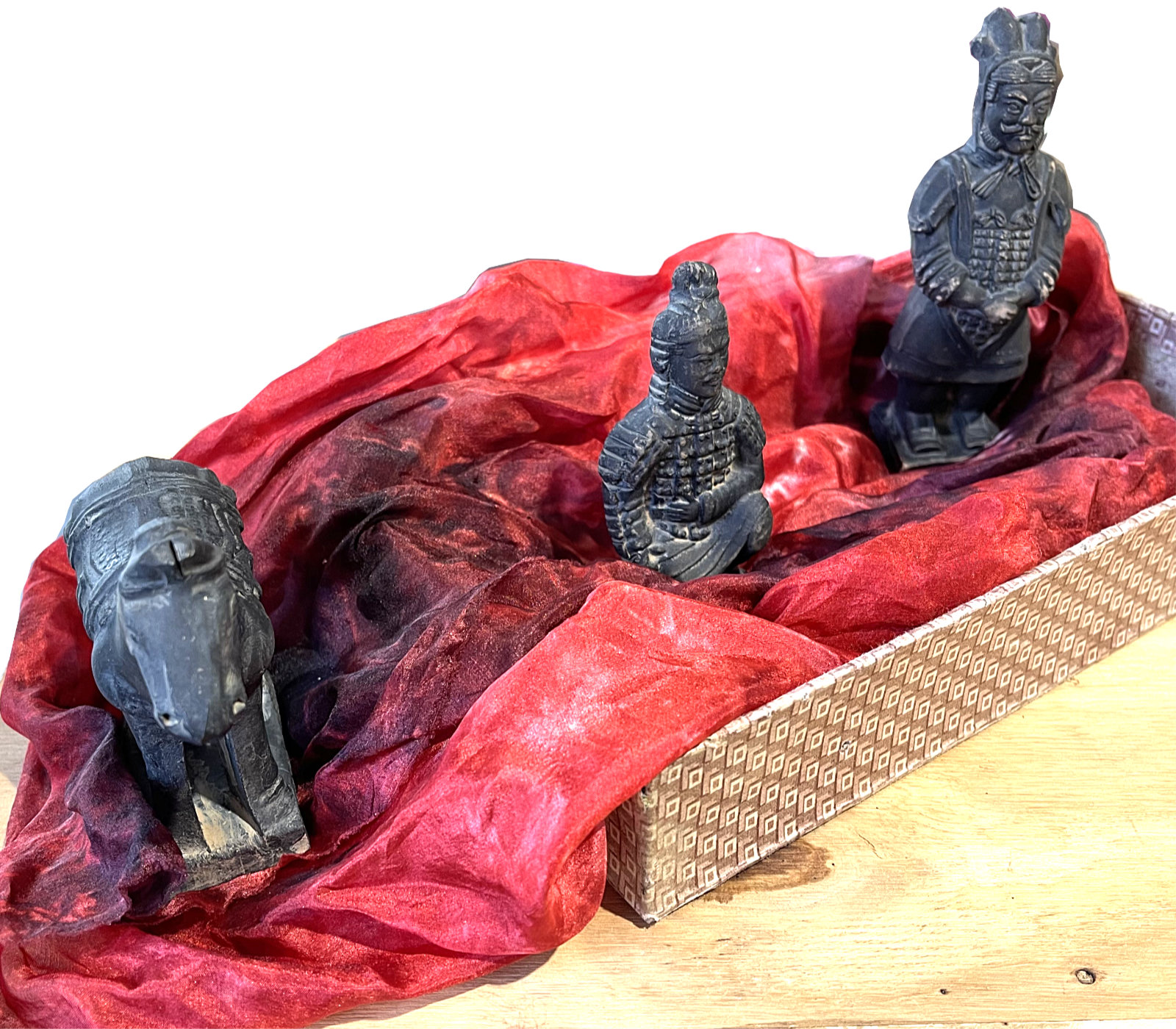
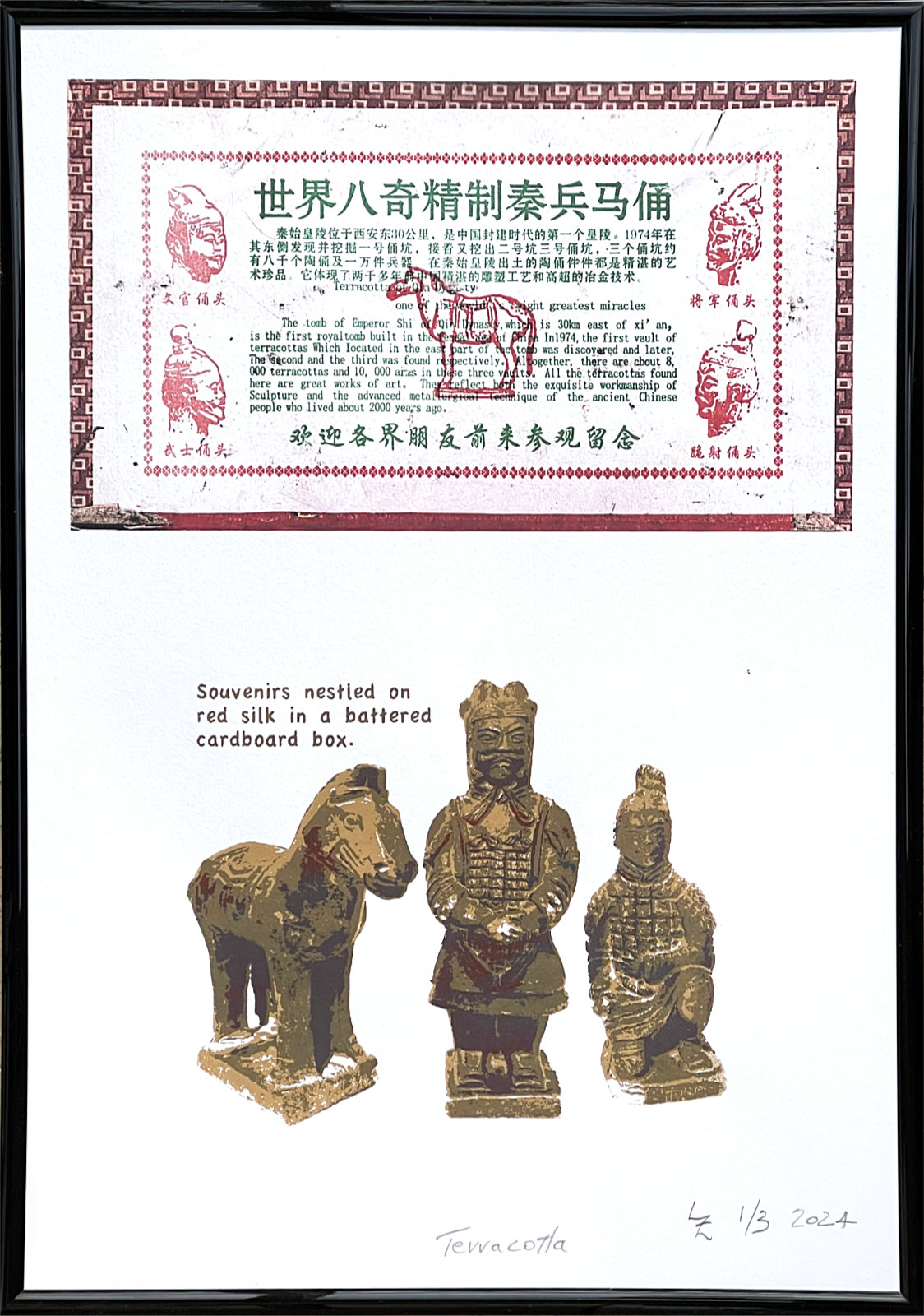
The Chinese text and illustrations shown at the top of the Link 2 print (below) were on the box lid and not visible in this view.
Terracotta continues my exploration of silk screen techniques using the MiScreen process, combined with a digitally printed scan of the tourist-oriented details. Hopefully I've maintained the cultural significance of the original with a realistic representation of the figurines themselves.
The screen printing started with a photo of the figurines, in-computer processing removed unwanted background and posterised the image. Three screens of decreasing intensity, printed with an ink mix proceeding from light to dark, optimised detail, particularly in the faces. The concept is similar to that with a reduction lino print.
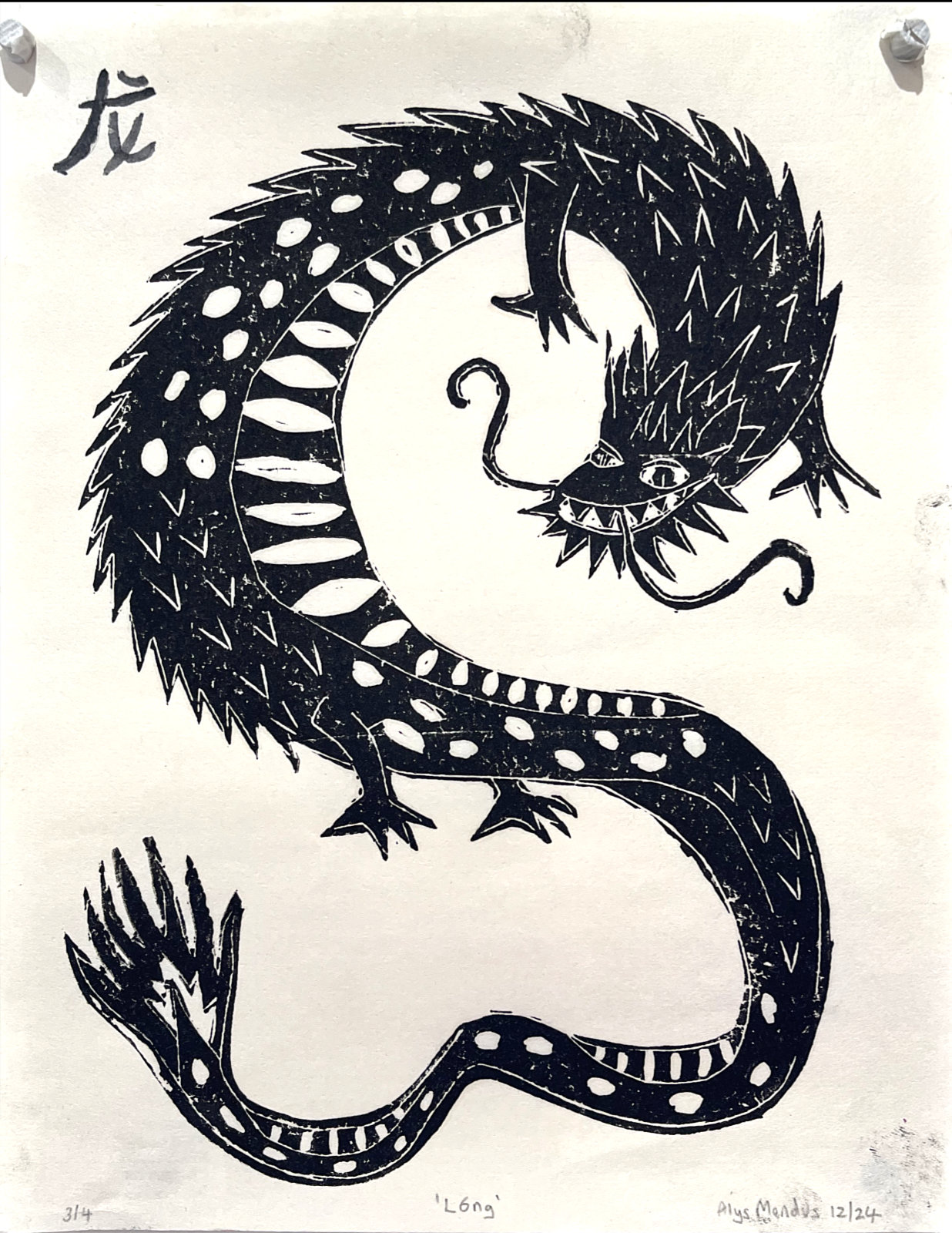
Alys Mendus now lives on Wadawurrung Country inVictoria and makes art from her little home studio inspired by the natural world around her.
This pieces of the dragon as 2024 was the Chinese Zodiac year of the dragon. This piece responded to a print of the Terracotta Warriors.
I have been to Xian to see them and thought I would respond with something connected to that trip but I was taken by the shape and design of the dragon and felt as it was almost the end of the year of dragon to create a print to celebrate it.
This beautifully nimble dragonfly reminded me of a winged dragon that was poised in his glittering surroundings ready to swoop down on unsuspecting victims.
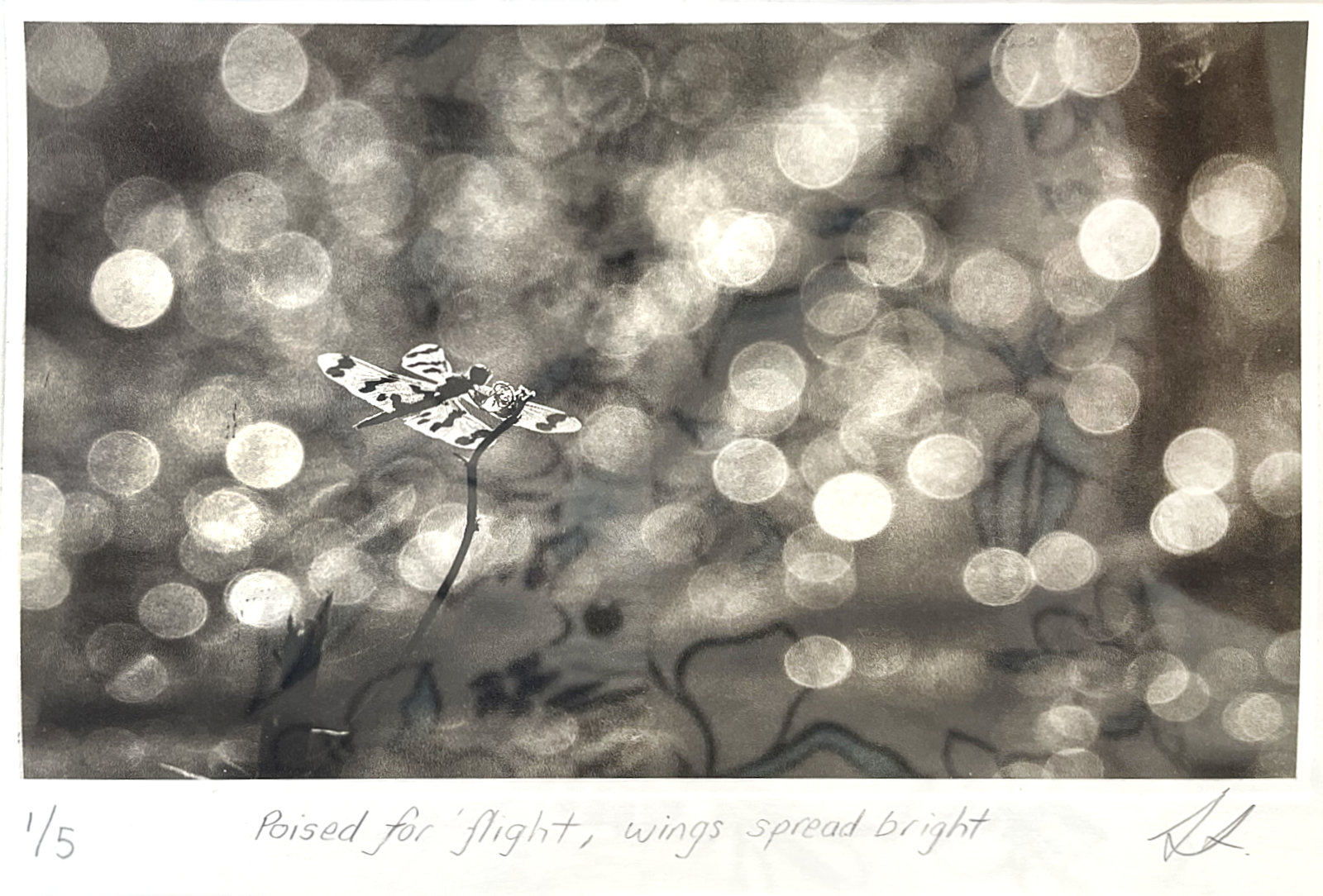
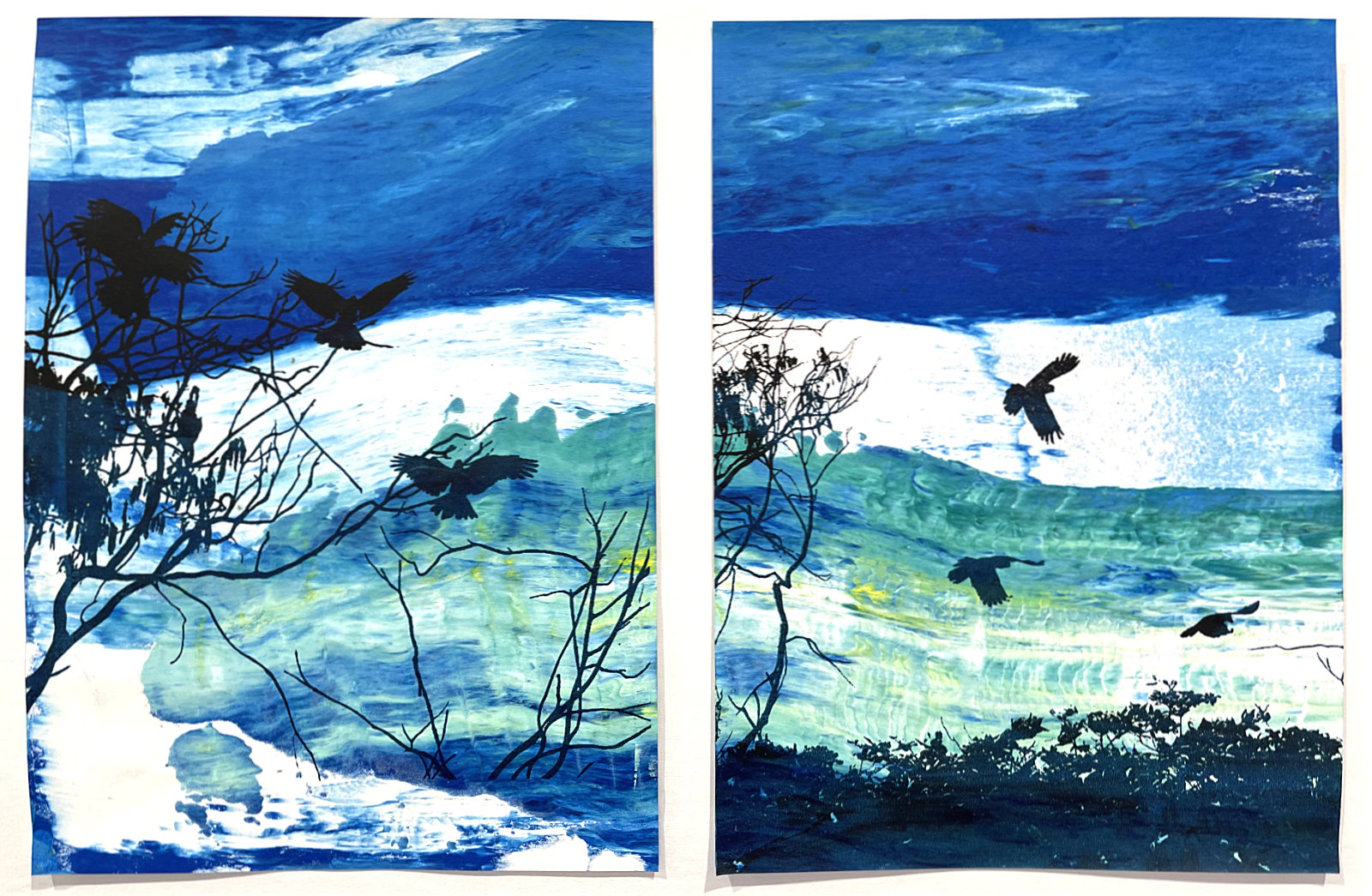
Sally North's print captured a moment in time beautifully; a dragonfly delicately hovering yet poised for a sudden darting flight. The sunlight cast a warmth yet highlighted a feeling of stillness. In contrast, black cockatoos are loud and chaotic so how to capture them "poised for flight"? In photographing cockatoos, I tried to capture their energy and wildness in the action of landing and takeoff amongst the trees. The intense blues highlight this energy; express the joy and freedom of flight and capture my affinity for the sea.
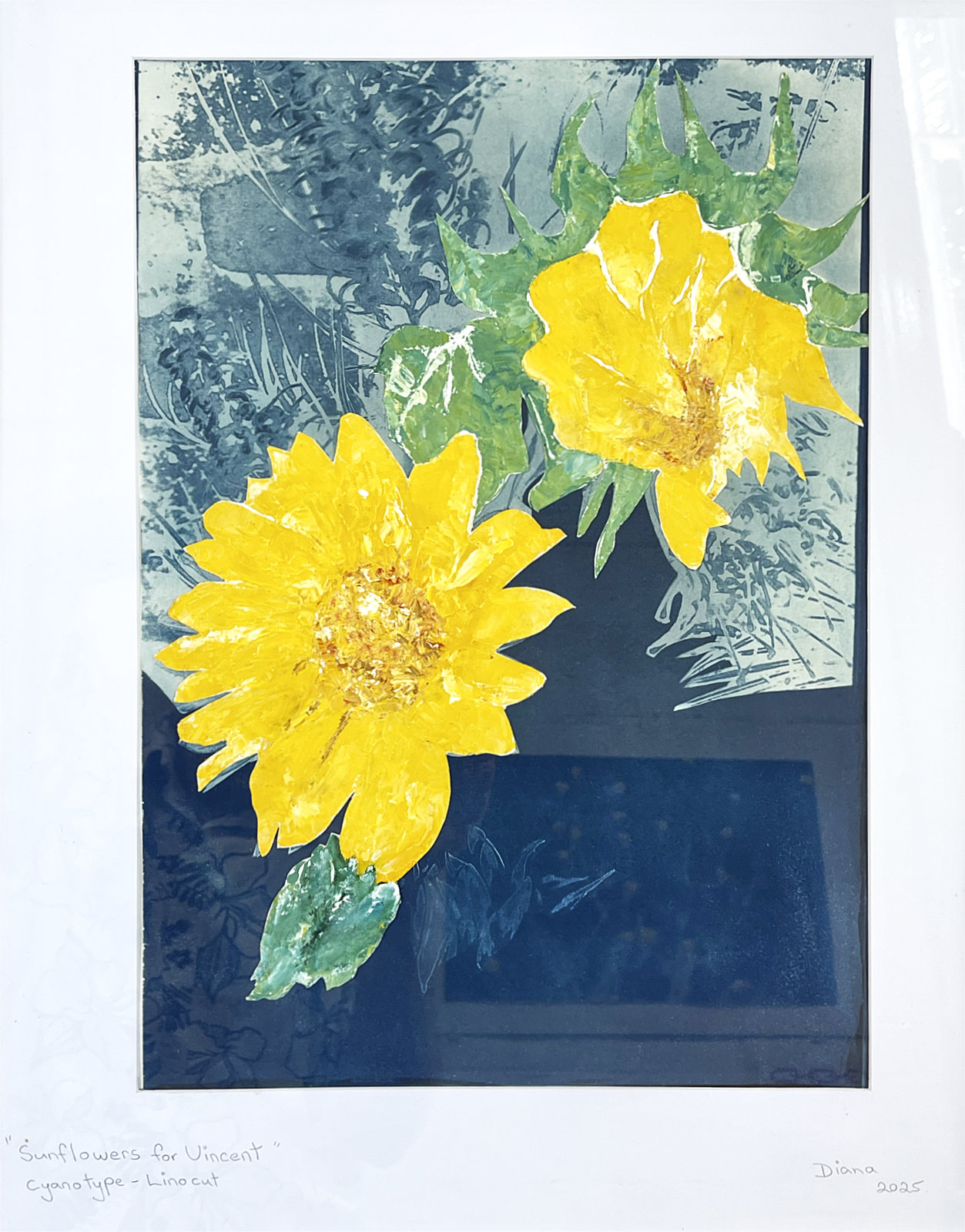
My inspiration was a reaction to focus on the original Artist. I developed the design for my print from a photograph I had taken. My Print is a Tribute to the work of Vincent Van Gough.
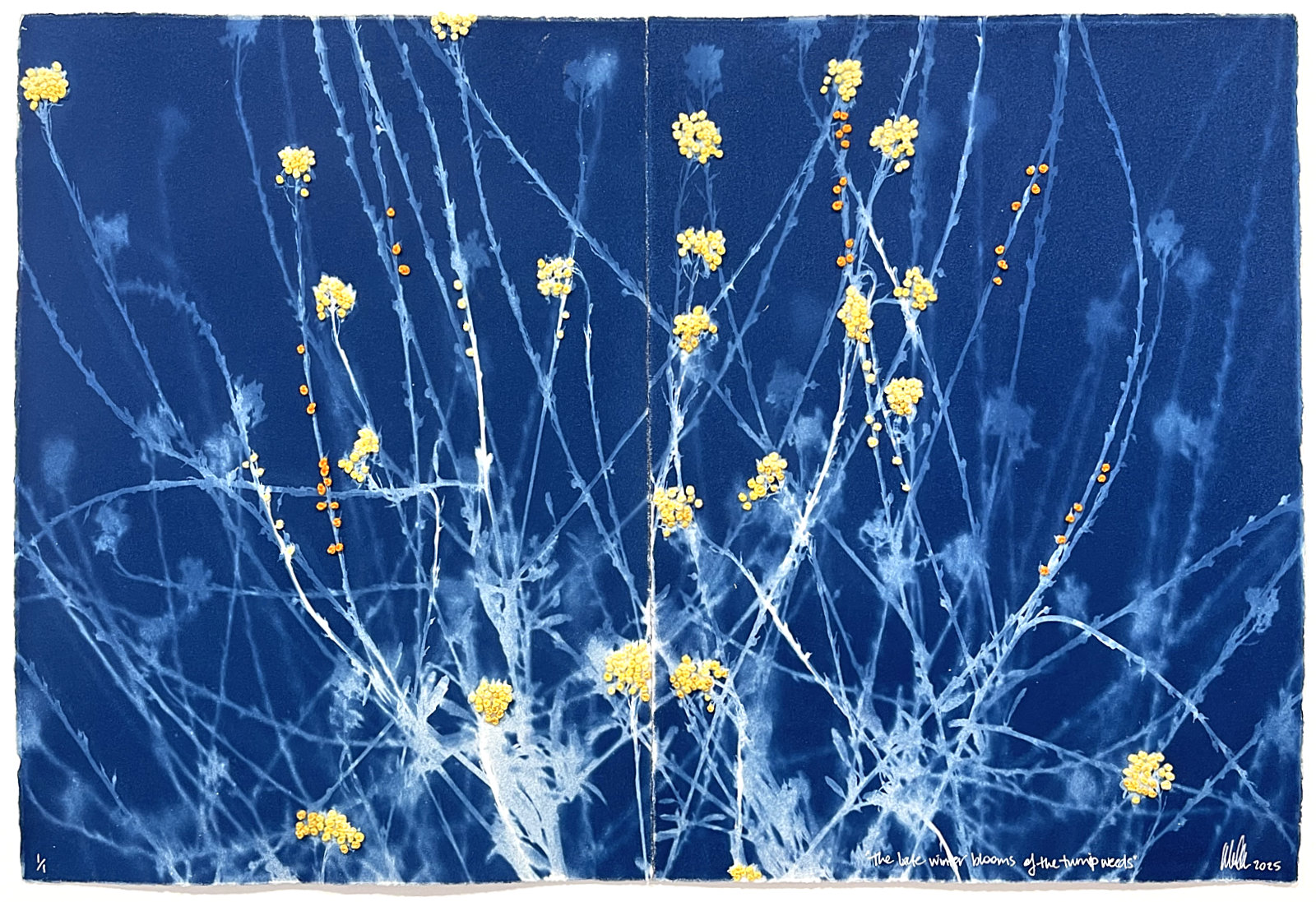
Just as sunflower crops flourish in the rural landscapes of southern Queensland, so too does turnip weed Ñ a resilient plant that thrives in agricultural fields and along roadside verges. Its delicate yellow blooms cluster in soft mounds, contrasting against the crisp blue of a winter sky. This sun print was created using a foraged bundle of these weeds, gathered from the paddock across the road from my home in Dalby.
Information for prospective members | Fb group: CPI Members only.
Capricornia Printmakers Inc | ABN 34 774 997 211 Mail: c/- Sturgess Dental, 10 East Street, Rockhampton Qld 4700. E-Mail: capricorniaprintmakers @ gmail.com. Studio: G-0.8 Walter Reid Cultural Centre, Corner Derby and East Street, Rockhampton. Page last updated 28 November 2025 [lz]
